The idea
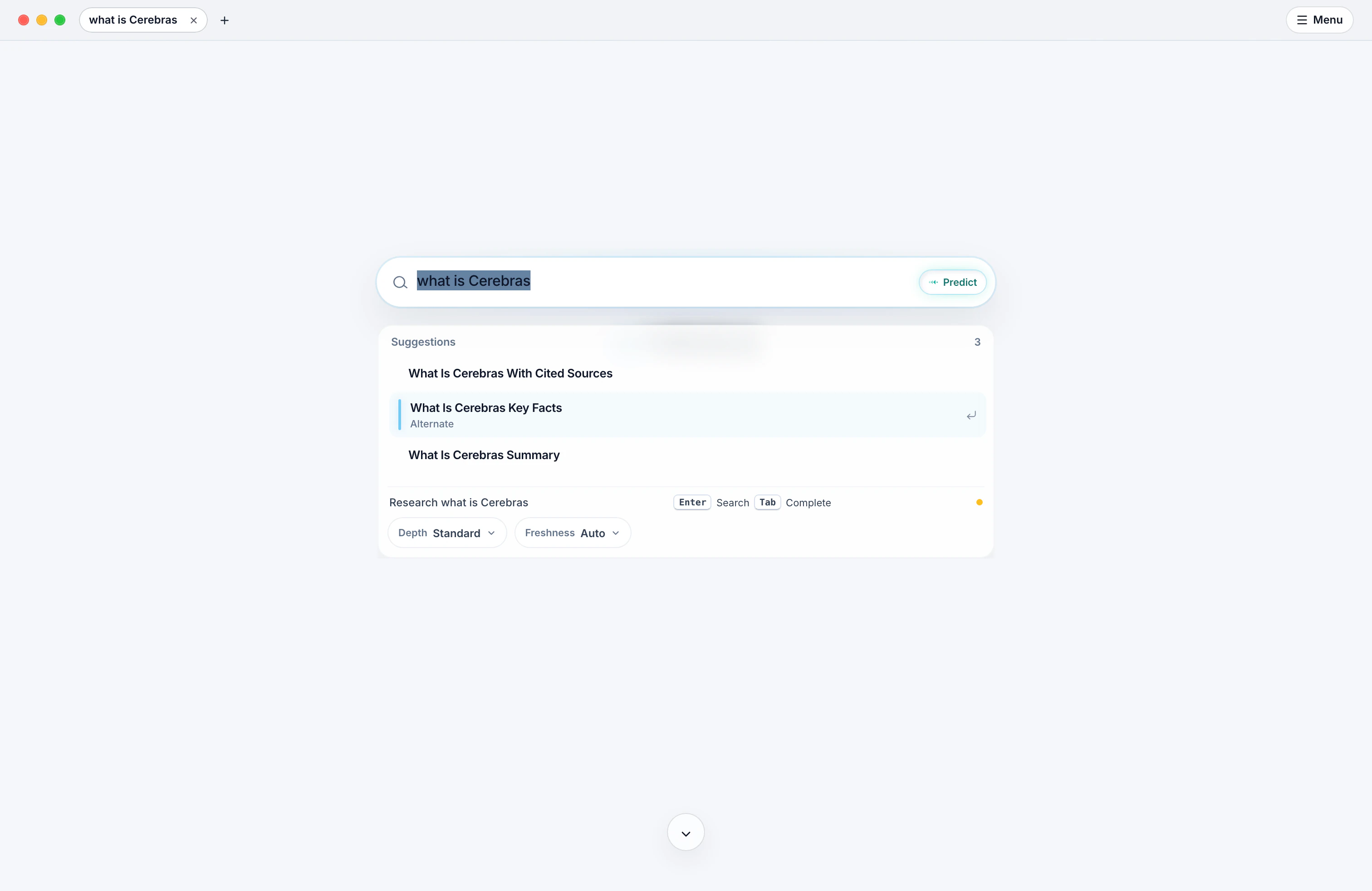
Velox is an Electron and Chromium-based desktop browser that turns web research into an inspectable agent workspace. It predicts intent while you type, launches bounded research sessions, opens real pages in visible tabs, and synthesizes cited answers into a visual canvas.
The problem
Most AI search tools hide the browsing process and only begin once a full query is submitted. Browser automation is also brittle when the user cannot see what the agent opened, read, skipped, or cited.
How it works
I built a desktop shell, React browser chrome, Express/WebSocket agent server, Playwright research runtime, source shelf, export path, and no-key demo mode. The research flow streams session state as agents navigate, capture evidence, and hand off to a synthesis agent.
System
Visible research flow
Predictive intent opens real Chromium tabs, then streams evidence into a cited answer canvas.
Predictive omnibox to visible agent tabs to research canvas. Cerebras × Gemma 4 hackathon origin for low-latency drafting.
The work
Real browser UI as the hero surface; Playwright research runtime; no-key demo via DEMO_MODE_ENABLED; Markdown and JSON export endpoints.

Visible agent tabs · no-key demo · Markdown and JSON export
Where it stands
The local app ships as a hackathon-ready alpha (v0.3.0) with predictive intent, visible agent tabs, live browsing evidence, cited answer generation, Markdown/JSON export, persisted session snapshots, and a one-command macOS boot path.
Scope and constraints
Product still evolving; agent actions remain user-initiated and inspectable. Live tab takeover is still listed as future work.